Beer Glasses: A Guide to Choosing Between Teku, Pint, Tulip, and Mugs
Beer glasses are not only distinguished by shape, capacity, or style. The glass profile influences foam development, aroma dispersion, beverage temperature, and how the beer reaches the palate.
A highly aromatic IPA, a fresh Lager, and a Belgian Strong Ale do not express the same characteristics. Serving them in the same glass is possible, but choosing a more suitable shape allows you to better appreciate the brewer's work and make the tasting more discernible.
It's not necessary to own dozens of different models. Understanding the differences between a Teku glass, pint, Tulip, and beer mug already allows you to build a versatile selection suitable for craft beer, Lagers, British styles, and more structured Belgian beers.
Beer Glasses and Mugs
From the Teku for tasting to the mug for Lagers: compare shapes, capacities, and models suitable for everyday service.
Why the Shape of Beer Glasses Matters
The shape of the glass alters the behavior of the beer from the moment it is poured. The diameter of the opening, the width of the bowl, height, glass thickness, and presence of a stem affect foam, aromas, and temperature.
A glass with a wide opening disperses aromas more quickly but makes the drinking experience immediate. A shape that narrows towards the rim concentrates the aromas and directs them towards the nose. A wide bowl provides space for the beer and foam, while a tall glass helps observe color, clarity, and bubble development.
The way you hold the glass also matters. In stemmed glasses, the hand stays away from the bowl, warming the beer less quickly. Pints and mugs, on the other hand, prioritize practicality, durability, and conviviality.
What is the Function of Beer Foam?
Foam is not just an aesthetic element. It retains some aromatic substances, limits the beer's direct contact with air, and accompanies the taste perception during drinking.
The ideal amount depends on the style. A Pils can be served with a compact and persistent foam cap, while some English beers naturally have lower carbonation. The correct glass helps manage this difference without forcing the service.
Does the Glass Really Change the Taste of Beer?
The glass does not alter the beer's composition, but it changes how aromas, carbonation, temperature, and texture are perceived. Consequently, the same beer may seem more fragrant, fresher, or more balanced depending on the vessel used.
The benefit is particularly evident with aromatic beers, Belgian Ales, IPAs, barrel-aged beers, and high-alcohol styles, where the olfactory profile is an important part of the experience.
Teku Glass: The Choice for Tasting
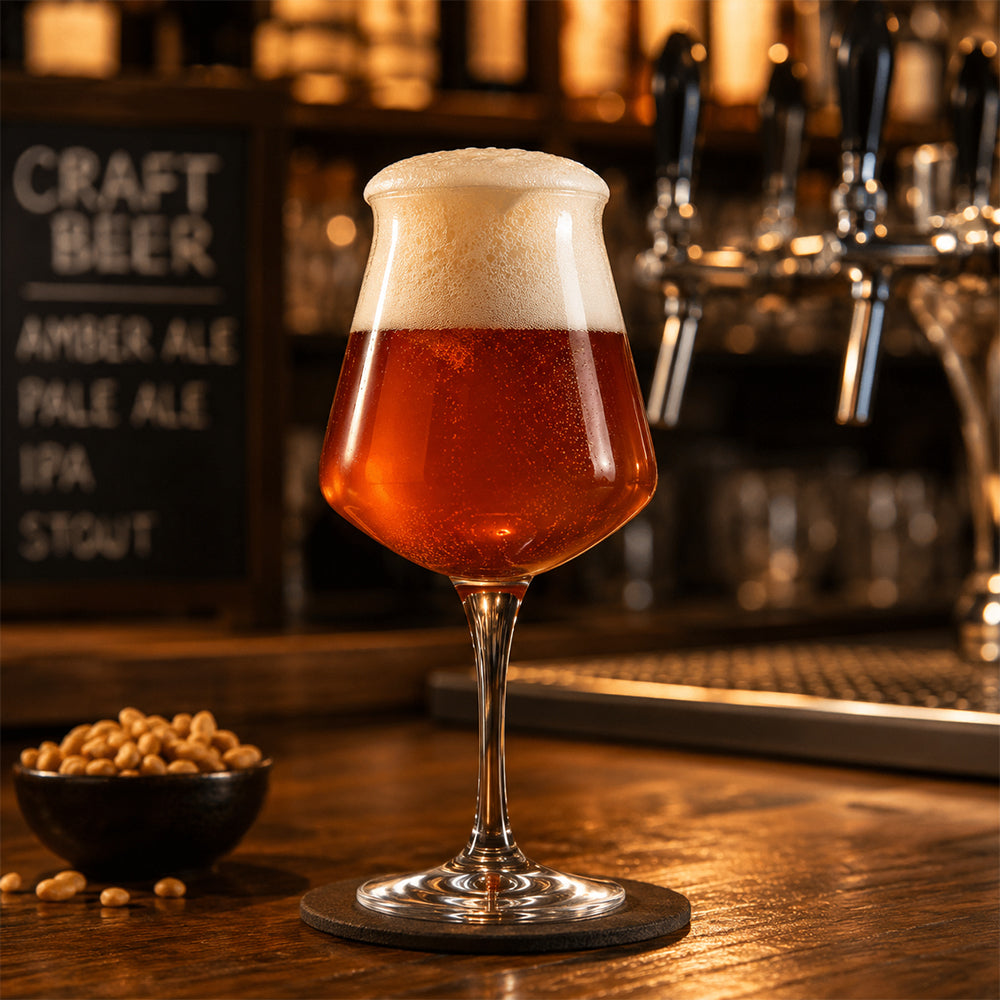
The Teku glass is one of the most recognizable models in the world of craft beer. It features a stem, an angled bowl, and an opening that narrows before slightly widening at the rim.
The bowl allows space for aroma development, while the upper part concentrates them towards the nose. The thin rim guides the beer to the palate, and the stem allows you to hold the glass without directly warming the bowl.
The Teku is often considered a universal tasting glass because it adapts to very different styles. It is particularly useful when you want to analyze the aroma, color, foam, and evolution of the beer in the glass.
Which Beers to Serve in the Teku?
- IPA and Double IPA: the shape concentrates hop aromas and supports aromatic tasting.
- Saison: enhances spicy, fruity, and fermentative notes.
- Belgian Ale: provides space for the complex aromas typical of Belgian yeasts.
- Sour Ale: allows precise perception of acidity, fruit, and fermentative notes.
- Barrel-aged beers: helps discern wood, spice, and maturation aromas.
- Barley Wine and meditation beers: favors a slow and controlled tasting.
The Teku is less suitable when you want to quickly drink a simple and very fresh beer. In these cases, a pint, a cylindrical glass, or a mug may be more practical.
Teku for Craft Beer
The bowl concentrates aromas, the stem limits hand contact, and the thin rim guides the tasting.
Beer Pint: The Versatile Pub Glass
The beer pint is primarily associated with British culture and pub service. The term also refers to a unit of capacity, but in common language, it is used to describe sturdy, capacious glasses designed for convivial drinking.
Compared to the Teku, the pint concentrates aromas less and offers a less analytical experience. Its advantage is practicality: it is easy to hold, durable, simple to wash, and suitable for numerous styles.
Not all pints have the same shape. Some are almost cylindrical, while others have a bulge near the rim that improves grip and helps prevent stacked glasses from getting stuck.
Which Beers to Serve in the Pint?
- Bitter: the British style finds its most traditional service in the pint.
- Pale Ale: the shape accompanies a simple and direct drink.
- Porter: the capacity and opening are suitable for informal service.
- Stout: allows creamy foam to develop at the top.
- Lager: is a practical solution for everyday consumption.
- Session IPA: adapts to light and drinkable beers.
The pint is a good choice for barbecues, appetizers, parties, and dinners with many people. It is less specific than a tasting glass, but this very neutrality makes it one of the most usable beer glasses.
Tulip Glass: Concentrated Aromas and Stable Foam
The Tulip glass is named after its shape, reminiscent of the tulip flower. The bowl is wide in the middle and narrows towards the top, then slightly opens near the rim.
This structure allows the beer to develop aromas in the bowl and concentrate them at the top. The flared rim also promotes foam formation and retention.
The Tulip is particularly suitable for complex, structured, and aromatic beers. It offers a more tasting-oriented experience than the pint but maintains a traditional and immediate shape.
Which Beers to Serve in the Tulip?
- Dubbel: enhances malt, ripe fruit, and spice notes.
- Tripel: concentrates aromas without hindering foam development.
- Belgian Strong Ale: accompanies structure, intensity, and aromatic complexity.
- Quadrupel: allows a slow tasting of malt and fruit notes.
- Barley Wine: supports intense aromas and higher alcohol content.
- Saison and spiced beers: highlights fermentative components.
The Tulip can be considered an intermediate choice between the Teku and more traditional Belgian goblets. It is sufficiently technical for tasting but retains a warm and convivial presence at the table.
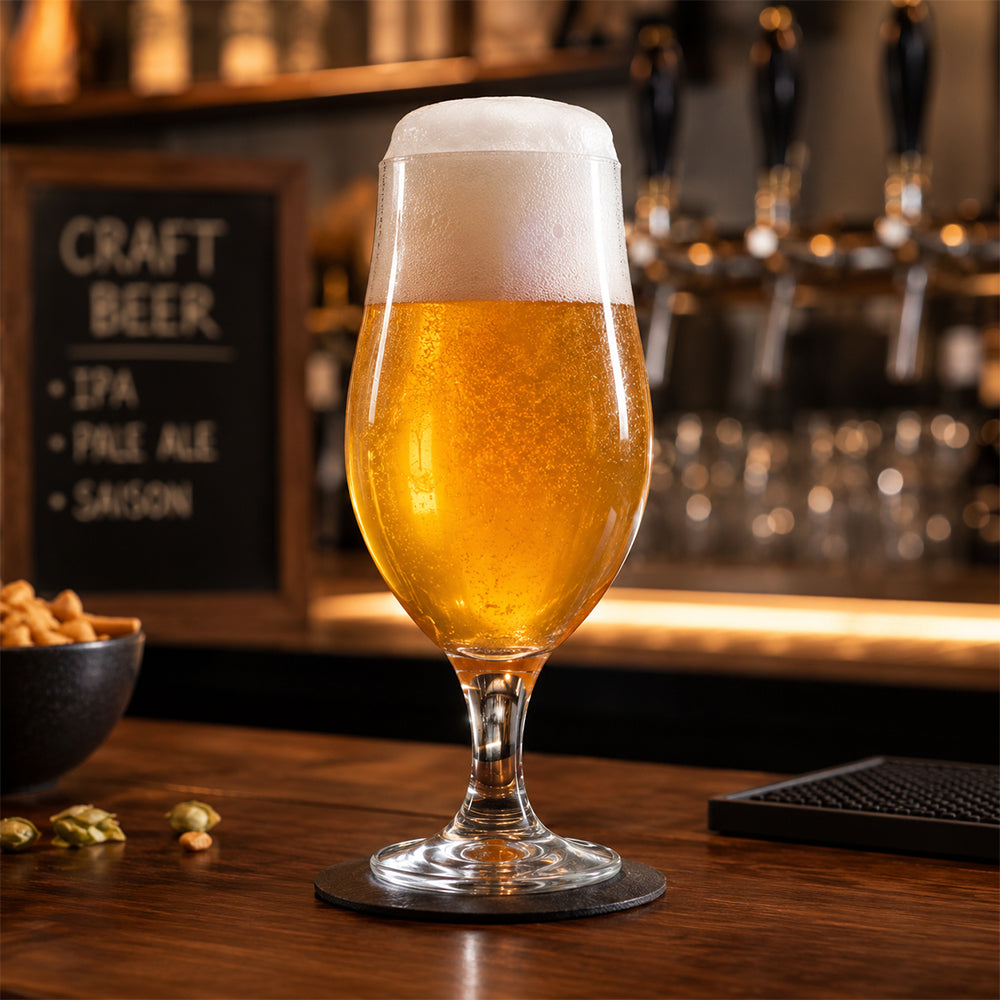
Tulip for Belgian Beers
The wide bowl develops aromas, while the narrower rim concentrates them and supports the foam.
Beer Mug: Robustness and Tradition
The beer mug is characterized by sturdy walls, generous capacity, and a side handle. It is one of the symbols of German beer halls, popular festivals, and informal service.
The handle prevents direct hand contact with the body of the glass and limits heat transfer. The thick glass offers greater resistance to impacts but does not automatically keep the beer cold for an indefinite time.
The mug prioritizes practicality and conviviality over aroma concentration. It is therefore suitable for fresh, clean, and drinkable beers, while it is less effective for more complex and aromatic styles.
Which Beers to Serve in the Mug?
- Helles: the mug accompanies a fresh and malty drink.
- Märzen: is one of the most traditional associations with German service.
- Kellerbier: the robust shape suits the rustic character of the style.
- German Lagers: the mug emphasizes conviviality and freshness.
- Oktoberfestbier: represents the most iconic service during themed parties and dinners.
- Less aromatic Bocks: can be used when a less analytical drink is preferred.
Glass or Ceramic Mug?
The glass mug allows you to observe color, clarity, and foam. It is versatile, easy to pair, and suitable for both home and restaurant use.
The ceramic mug shields the beer from light and recalls traditional service. However, it does not allow visual observation of the beverage. The choice depends more on the desired experience than on the absolute quality of the vessel.
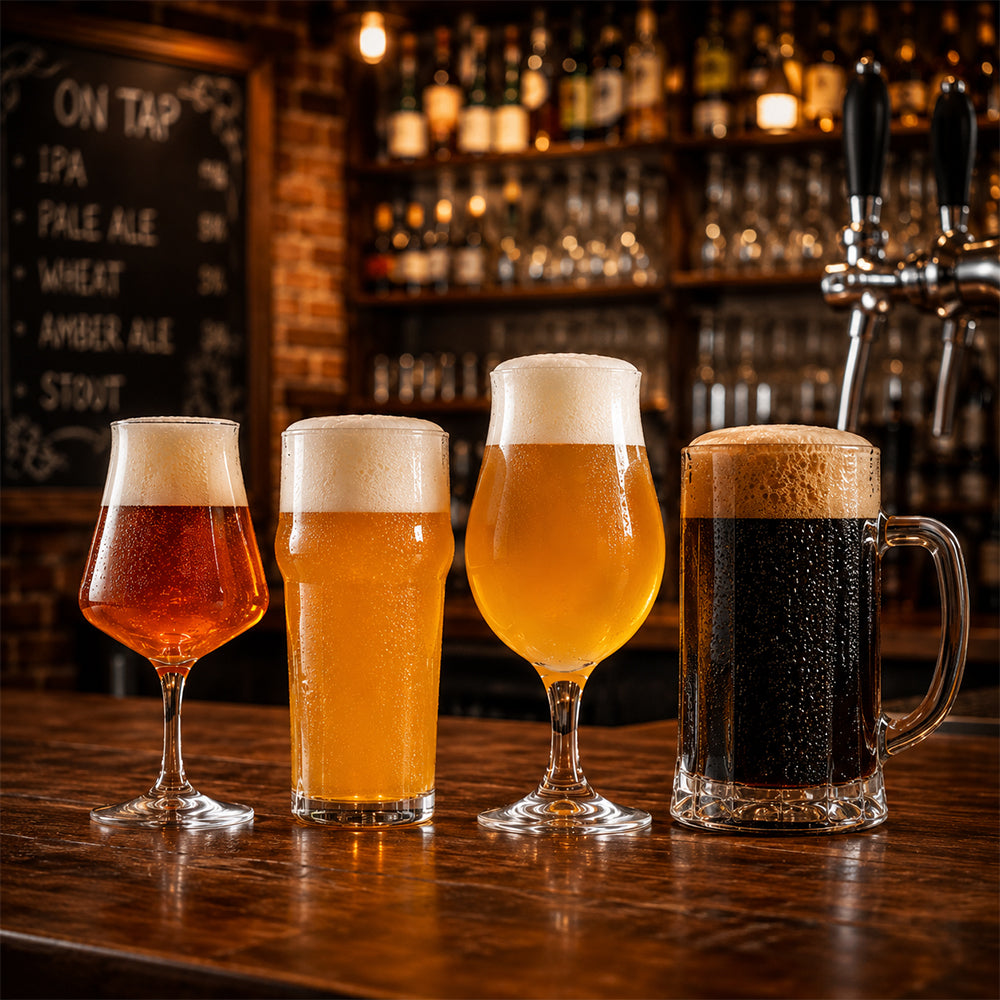
Teku, Pint, Tulip, or Mug: The Differences
The choice between Teku, pint, Tulip, and mug depends on the beer, the occasion, and the level of attention you want to dedicate to the tasting.
| Glass | Characteristics | Ideal for | Experience |
|---|---|---|---|
| Teku | Angled bowl, thin rim, and stem | IPA, Saison, Sour, barrel-aged beers | Analytical and aromatic |
| Pint | Simple, sturdy, and capacious shape | Bitter, Pale Ale, Porter, Stout, Lager | Direct and convivial |
| Tulip | Wide bowl and narrower opening | Dubbel, Tripel, Quadrupel, Belgian Ale | Rich and tasting-oriented |
| Mug | Thick glass, large capacity, and handle | Helles, Märzen, Kellerbier, German Lagers | Informal and traditional |
Goblet or Pint: Which to Choose?
The goblet is preferable when aromas are a central part of the beer. The stem limits warming caused by the hand, while the bowl offers space to slightly swirl the beverage and perceive its olfactory profile.
The pint is more suitable when seeking a simple, practical, and convivial drink. It requires no special attention, offers good capacity, and is suitable for everyday or less complex styles.
For an aromatic IPA, a Belgian Ale, or a barrel-aged beer, a goblet is generally more appropriate. For a Bitter, a pub Stout, or a Lager to be served during a barbecue, the pint often represents the most natural solution.
Other Beer Glasses to Know
Teku, pint, Tulip, and mug cover a significant part of the service, but they are not the only available shapes. Some styles find a more precise match in specific glasses.
Weizen Glass
The Weizen glass is tall, slender, and wider at the top. It is designed to contain the volume of foam typical of wheat beers and to showcase color, cloudiness, and liveliness.
It is suitable for Weissbier, Hefeweizen, Dunkelweizen, and other wheat beers.
Beer Flute
The flute keeps the rise of bubbles visible and focuses the service on freshness and carbonation. It can be used for dry, sparkling, and light beers, but the narrow bowl limits the development of more complex aromas.
Snifter
The snifter features a wide bowl and a narrower opening. It is suitable for full-bodied, alcoholic, and slow-tasting beers, such as Imperial Stout, Barley Wine, and some barrel-aged beers.
Goblet
Goblets or chalices are mainly associated with Belgian abbey beers. They offer space for abundant foam and a significant presence at the table, but they can disperse aromas more quickly if the opening is very wide.
Which Glass to Use for Each Beer Style?
| Beer Style | Recommended Glass | Versatile Alternative |
|---|---|---|
| IPA | Teku or aromatic goblet | Tulip |
| Pils and Lager | Tall glass or mug | Pint |
| Stout and Porter | Pint | Teku for more complex versions |
| Weissbier | Weizen glass | Tall and capacious glass |
| Dubbel and Tripel | Tulip or goblet | Teku |
| Saison | Teku | Tulip |
| Sour Ale | Teku | Tasting goblet |
| Imperial Stout | Snifter or Teku | Tulip |
| Barley Wine | Snifter | Teku or Tulip |
| Märzen and Helles | Mug | Pint |
How to Choose Beer Glasses for Home
To build a home collection, it's not necessary to buy a glass for every single style. It's more useful to choose a few complementary models that can cover the beers consumed most frequently.
A pint represents the base for Lager, Bitter, Pale Ale, Porter, and Stout. A Teku adds a solution suitable for craft beer and aromatic styles. A Tulip completes the service for Belgian Ales and structured beers.
The mug is recommended for those who often drink German Lagers, organize barbecues, or prefer a robust and informal service. Those who love Weissbier should also add a Weizen glass.
The Essential Selection of Three Glasses
- Pint: for everyday beers, Lager, Stout, and Pale Ale.
- Teku: for IPA, craft beers, Sour, and tastings.
- Tulip: for Belgian, structured, and high-alcohol beers.
The Complete Selection of Five Glasses
- Teku: for general tasting.
- Pint: for British styles and informal service.
- Tulip: for Belgian beers.
- Mug: for German Lagers and convivial occasions.
- Weizen: for wheat beers.
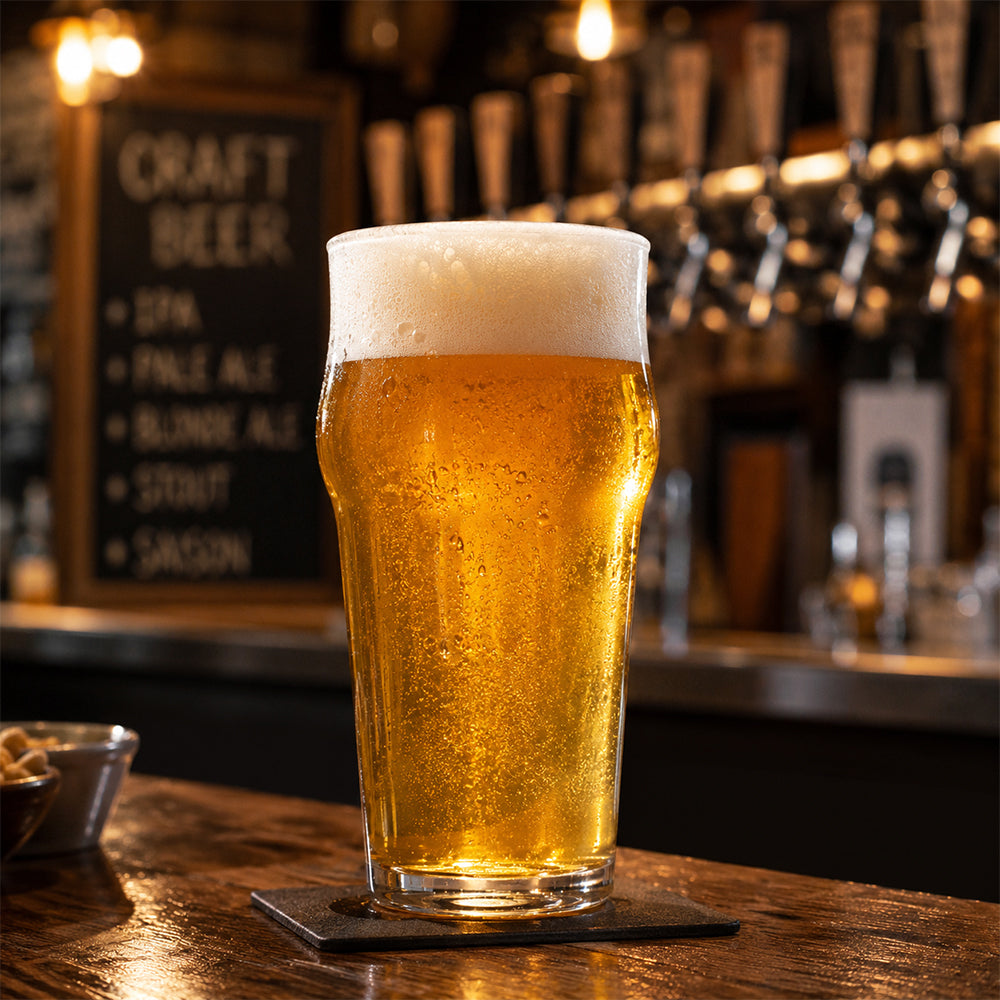
The Essential Selection
With a pint, a Teku, and a Tulip, you can correctly serve most common beers.
How to Pour Beer Correctly
The way beer is poured affects foam formation and carbon dioxide release. Pouring too slowly along the side can produce little foam, while a completely vertical pour can create excessive foam.
For most beers, it is advisable to tilt the glass at about 45 degrees and pour along the inner wall. When the glass is about half full, you can gradually straighten it and direct the flow towards the center.
The result should be foam proportionate to the style, compact and without overflowing. Highly carbonated beers, Weissbier, and some Belgian styles require a slower and more controlled pour.
Practical Procedure
- Use a clean glass free of residues.
- Initially tilt it at about 45 degrees.
- Pour the beer along the inner wall.
- Gradually straighten the glass.
- Finish pouring in the center to form foam.
- Leave the necessary space at the top.
Why the Glass Must Be Perfectly Clean
Residues of grease, detergent, or rinse aid can compromise foam stability and alter aroma perception. A seemingly clean glass may therefore not be suitable for beer service.
The inner surface should allow the foam to gradually adhere to the walls while drinking. If the foam disappears immediately or irregular bubbles form on the walls, residues or impurities may be present.
It is advisable to rinse glasses thoroughly and let them dry without using cloths that may transfer fibers or odors.
Should the Beer Glass Be Frozen?
Freezing the glass is generally not recommended. Excessive cold can reduce aroma perception, while ice on the surface can dilute the beer and alter foam formation.
A glass stored in a cool environment can be pleasant for some Lagers, but it should remain dry and free of frost. For aromatic, complex, or high-alcohol styles, it is preferable to use a glass at room temperature.
Beer Serving Temperature
Not all beers should be served at the same temperature. A light Lager can be pleasant at a lower temperature, while a complex and structured beer needs a few more degrees to release its aromas.
| Style | Indicative Temperature | Recommended Glass |
|---|---|---|
| Lager and Pils | 4-7°C | Mug, pint, or tall glass |
| Weissbier | 6-8°C | Weizen |
| Pale Ale and IPA | 7-10°C | Teku or Tulip |
| Dubbel and Tripel | 8-12°C | Tulip or goblet |
| Stout and Porter | 8-12°C | Pint, Teku, or snifter |
| Barley Wine and meditation beers | 10-14°C | Snifter, Teku, or Tulip |
The indicated temperatures are indicative. Alcohol content, structure, recipe, and personal preferences may require slight adjustments.
Errors to Avoid in Selection and Service
- Always using the same glass: a universal shape is practical, but it can penalize very aromatic or particularly carbonated beers.
- Filling the glass to the brim: eliminates the space intended for foam and makes it more difficult to perceive aromas.
- Serving beer too cold: excessively low temperatures dampen aromas and flavors.
- Freezing the glass: frost can dilute the beer and compromise the foam.
- Using glasses with detergent residues: the foam loses stability, and foreign odors may appear.
- Holding the bowl for too long: in tasting beers, the hand can quickly increase the temperature.
- Pouring without forming foam: proper carbon dioxide release improves balance and perception.
- Choosing based solely on aesthetics: shape, opening, and capacity must be consistent with the intended use.
How to Wash Beer Glasses
Beer glasses must be washed carefully to avoid residues that can compromise foam and aromas. Before using the dishwasher, it is necessary to check the manufacturer's instructions.
In manual washing, it is preferable to use lukewarm water, a moderate amount of neutral detergent, and a clean sponge not used for greasy dishes. The rinse must completely remove any product traces.
Thin goblets should be held by the bowl during washing without twisting the base and stem simultaneously. After rinsing, they can be left to dry in a stable and ventilated position.
How to Store Goblets, Pints, and Mugs
Glasses can be stored upright, protecting the rim from pressure and impacts. Placing them upside down on a hard surface can exert weight on the rim and retain odors if the cabinet is not perfectly dry.
Stemmed goblets require enough space to avoid contact between the bowls. Pints and mugs are generally more robust, but it is still preferable not to stack them when the manufacturer does not recommend it.
Which Beer Glasses to Choose on Alberoshop.it
The choice should start with the beers consumed most often. Those who mainly drink Lager and Pils can opt for pints, tall glasses, and mugs. Those who prefer IPA, Saison, and craft productions can choose a Teku or an aromatic goblet.
For Dubbel, Tripel, and Belgian Strong Ale, a Tulip or goblet is recommended. Weissbier enthusiasts can complete the service with tall and flared glasses, capable of correctly containing beer and foam.
In the collection of beer glasses and mugs, you can compare shapes, capacities, and models intended for tasting, everyday service, and convivial occasions.
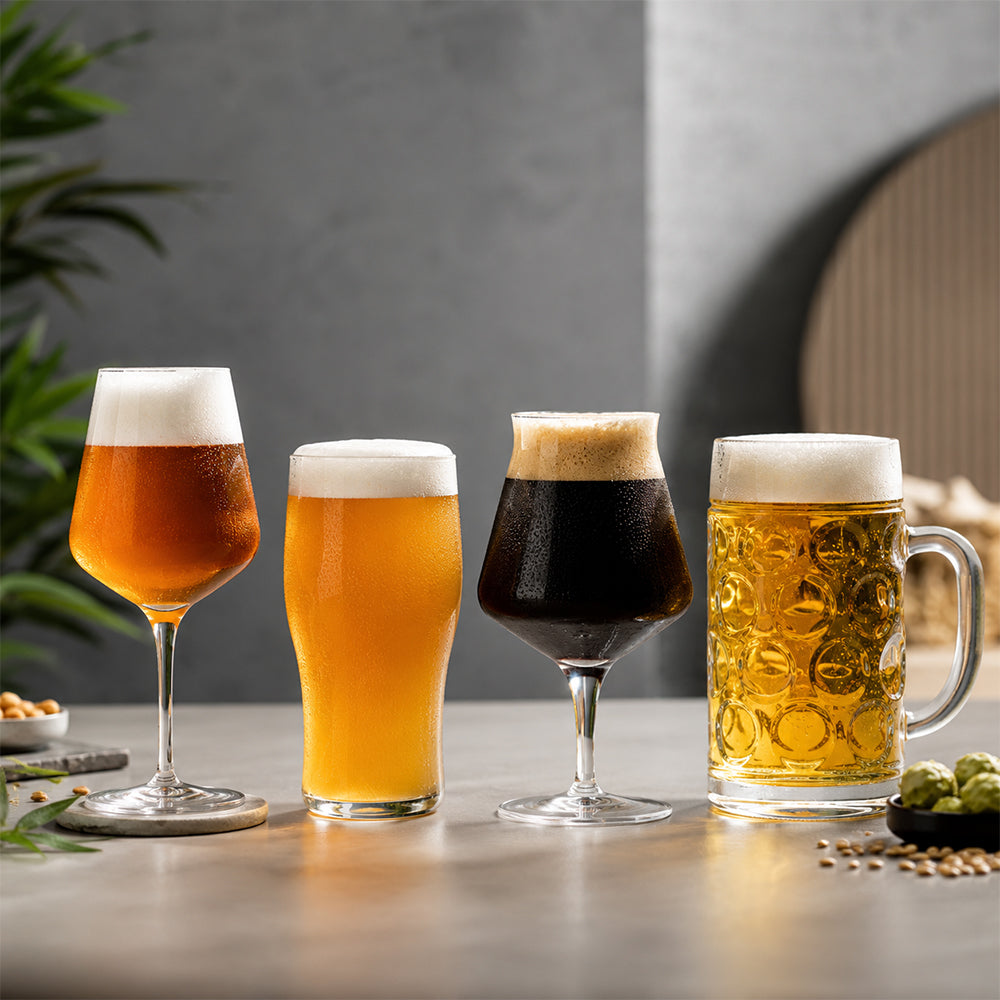
The Right Glass for Every Beer
Choose Teku, pints, goblets, and mugs based on style, occasion, and the type of tasting you want to create.
The Right Glass Enhances Every Beer Style
Choosing the correct glass does not mean following rigid rules or turning every drink into a technical tasting. It means using a shape consistent with the beer's characteristics and the desired experience.
The Teku enhances aromas and complexity. The pint prioritizes practicality and conviviality. The Tulip supports the foam and aromas of Belgian beers. The mug accompanies Lagers and German styles with robust and traditional service.
With three or four well-chosen models, you can correctly serve almost all common beers. Temperature, glass cleanliness, and pouring technique will complete the service, allowing foam, aromas, and taste to express themselves with greater balance.
Frequently Asked Questions About Beer Glasses
What is the Best Beer Glass?
There is no best glass for all beers. The Teku is versatile for tasting, the pint is practical for everyday service, the Tulip is suitable for Belgian beers, and the mug especially enhances Lagers and German styles.
What is the Teku Glass Used For?
The Teku glass is used to concentrate aromas and accompany precise tasting. It is suitable for IPA, Saison, Sour Ale, barrel-aged beers, Belgian Ale, and other complex craft beers.
Which Beers Are Drunk in a Pint?
The pint is suitable for Bitter, Pale Ale, Porter, Stout, Lager, and Session IPA. It is recommended when a simple, convivial, and less aroma-focused drink is desired.
Which Beers Are Served in the Tulip Glass?
The Tulip is suitable for Dubbel, Tripel, Quadrupel, Belgian Strong Ale, Saison, and Barley Wine. The shape concentrates aromas and helps support the foam.
When Is the Beer Mug Used?
The mug is mainly used for Helles, Märzen, Kellerbier, Oktoberfestbier, and other German Lagers. It is suitable for barbecues, parties, and informal occasions.
Which Glass to Use for an IPA?
For an IPA, it is advisable to use a Teku, a Tulip, or an aromatic goblet. These shapes concentrate hop aromas and leave space for foam formation.
Which Glass to Use for a Weiss Beer?
Weissbier is generally served in a Weizen glass, tall and flared. The shape contains abundant foam and allows observation of color, cloudiness, and carbonation.
Can the Teku Glass Be Used for All Beers?
The Teku is one of the most versatile glasses and can be used for many styles. For simple Lagers, Weissbier, or beers to be drunk in larger quantities, a pint, a Weizen, or a mug may be more suitable.
Should the Beer Glass Be Rinsed Before Use?
A quick rinse with clean water can remove dust and residues, but the glass should not contain visible water. It must be clean, odor-free, and without detergent traces.
Why Does Beer Foam Disappear Quickly?
Foam can disappear quickly due to grease, detergent, or rinse aid residues in the glass. Temperature, carbonation, and style characteristics also influence its persistence.
Is It Correct to Freeze Beer Glasses?
Generally, no. Frost can dilute the beer, reduce aromas, and alter foam formation. It is preferable to use a clean, dry, and not excessively cold glass.
How Many Beer Glasses Are Needed at Home?
For a versatile selection, three models are sufficient: a pint for everyday service, a Teku for craft beer, and a Tulip for Belgian and structured beers. A mug and a Weizen can complete the collection.
Where to Buy Beer Glasses and Mugs?
You can find goblets, pints, and beer mugs on Alberoshop.it, comparing shapes and capacities suitable for tasting, everyday service, and convivial occasions.