Have you ever heard of Federico De Majo? You have probably seen his products
The name Federico De Majo may not mean anything to you straight away.
His products, most likely, do.
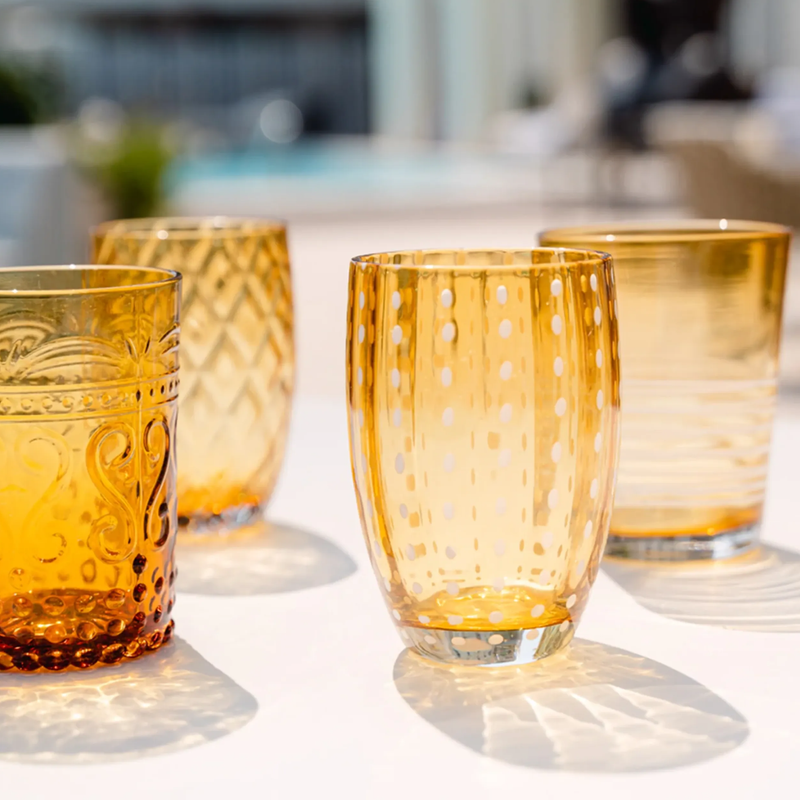
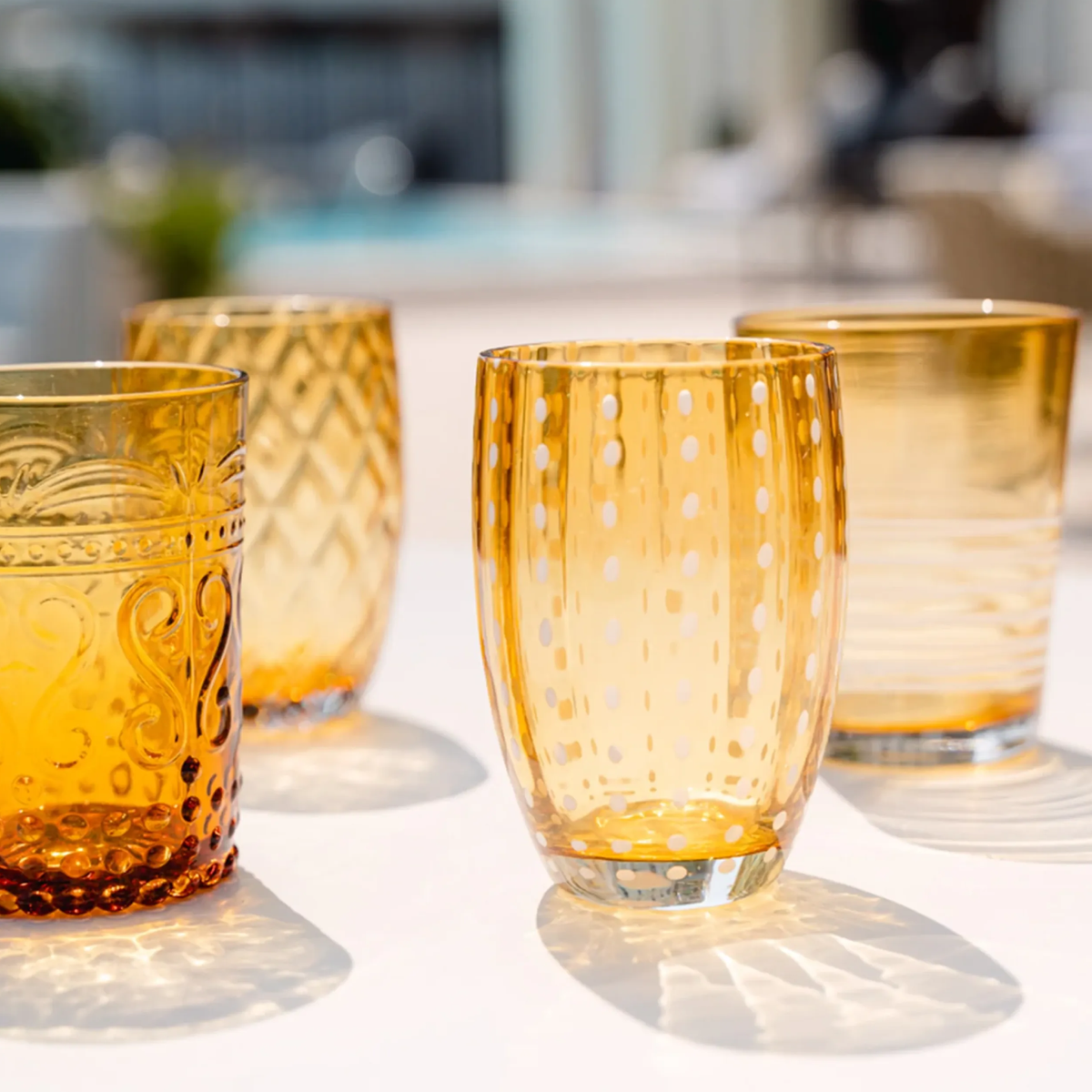
Glasses punctuated by small coloured spheres. Handcrafted glass. Stemware designed to enhance specific drinks. Objects that can bring colour to the table without needing decorated tablecloths or monumental centrepieces.
Behind many of these ideas is Federico De Majo, Venetian designer, founder and creative director of Zafferano.
And this is precisely one of the most interesting aspects of design: we can recognise an object, desire it and use it every day without ever asking ourselves who conceived it.
This time, we start with the signature.
Perhaps the name has not yet made it into your design address book. But among coloured glasses, glass spheres and portable lamps, it is very likely that you have already encountered at least one of his ideas.

Who is Federico De Majo, in brief?
Federico De Majo is a Venetian designer and entrepreneur, and the founder of Zafferano. His career began in the family glassworks in Murano and spans artistic glass, lighting, tasting glasses and tableware.
His design combines artisanal tradition, function, colour and contemporary forms. His most recognisable projects include glass collections such as Perle and Bilia, as well as numerous pieces of stemware and lighting products.
Who is Federico De Majo?
To understand Federico De Majo's design, you have to start with Venice and, more precisely, Murano.
De Majo was born in the lagoon city and became familiar with glass at a young age, following the work of the family glassworks and working alongside master glassmakers.
This hands-on experience set him on a professional path that first crossed the world of lighting, then tasting and tableware, leading to the founding of Zafferano in 2001.
Glass, therefore, did not come later.
It was the starting point.
And it remains one of the most useful keys to reading his collections today: knowledge of the material, attention to craftsmanship, use of light and the ability to turn a chromatic detail into a distinctive element.
Federico De Majo and Zafferano: from glass to the table
Federico De Majo is the founder, designer and CEO of Zafferano, a brand initially created around tasting-glass design and later developed in the worlds of tableware and lighting.
In his work, form, colour and function continuously coexist.
This does not mean creating a beautiful object and only later deciding what it might be used for. De Majo's work pays close attention to the practical use of a glass and to the relationship between shape, drink and tasting experience.
Over the years, he has designed glasses dedicated, among others, to Bolgheri, Soave, Franciacorta and Novello. He has also worked on technical stemware in which geometry, opening and proportions contribute to the perception of scents and aromas.
Alongside function, however, another element always remains recognisable: colour.
In Zafferano collections, colour is not used merely as decoration. It becomes part of the object's identity and a way to bring personality to moments of conviviality.
In the Zafferano collection, you can see how this philosophy extends across glasses, stemware, bottles, table accessories and lighting products.
Form, function and colour: three simple ingredients, at least until you try to combine them without turning the table into a permanent carnival. That is where the designer comes in.
How do you recognise Federico De Majo's design?
Not every collection designed by Federico De Majo is the same. Yet a few elements return with a certain consistency:
- glass, used as a functional and expressive material;
- colour, often concentrated in immediately recognisable details;
- craftsmanship, rooted in Venetian glass culture;
- function, which remains clear even in the most decorative objects;
- conviviality, because many products are designed to accompany everyday gestures;
- the distinctive detail, capable of giving identity to a simple form.
| Element | How it appears in the products | Effect on the table |
|---|---|---|
| Glass | Transparent, coloured, blown or handcrafted | Lightness and a relationship with light |
| Colour | Spheres, pearls, dots and chromatic details | Personality without additional decoration |
| Function | Forms designed for the table and tasting | Immediate everyday use |
| Craftsmanship | Handmade processes and Venetian glass culture | Small variations and product identity |
Perle: when colour becomes material
When looking at a glass from the Zafferano Perle collection, it is hard not to pause over the craftsmanship.
The line uses coloured glass worked by hand according to a traditional technique. Transparent, mass-coloured glass is combined with opaque glass-paste elements, creating a surface punctuated by small bursts of colour.
The result changes with the light: the glass remains functional, but also becomes one of the visually strongest elements of the table setting.

Perle brings colour directly into the material: transparency, opaque applications and light already do much of the work. The centrepiece can finally take the evening off.
The Zafferano Perle glass explains the project better than many words. It is handmade in coloured glass and uses its distinctive opaque elements to give rhythm and identity to the surface.
It remains a glass.
But simply placing it on the table is enough for it to stop being only a container.
Why are Perle glasses recognisable?
Perle glasses are recognisable thanks to the combination of transparent coloured glass and small opaque applications. The contrast between transparency, colour and material creates a finish that remains visible even when the glass is not in use.
This makes them particularly suitable for anyone who wants to create a colourful table starting with the glasses, keeping plates, textiles and decorations simpler.
Bilia: one sphere, one identity
Then there is Zafferano Bilia.
Here, the design gesture becomes even more essential: a coloured glass sphere inserted into the glass becomes the distinctive feature of the entire collection.
The Bilia line includes glasses, stemware, bottles, cups and other objects in borosilicate glass. The products are hand-blown and handcrafted, all sharing the coloured sphere as a recurring element.

One small coloured sphere and the glass takes on a different identity. Simple, at least after someone has had the right idea before everyone else.
In the Zafferano Bilia glass, the function remains immediately clear, but an apparently simple detail completely changes the object's personality.
And perhaps this is where De Majo's work is best understood.
You do not need to complicate a form to make it recognisable.
Sometimes, all it takes is finding the right detail.
Why has Bilia become an iconic collection?
Bilia has a visual code that is easy to recognise and apply to different objects. The coloured sphere is not simply decoration: it becomes the collection's signature and creates continuity between glasses, bottles and accessories.
Borosilicate glass also helps keep the forms light and transparent, leaving the sphere to concentrate the colour.
Perle and Bilia: what are the differences?
Perle and Bilia share the use of glass, colour and handcrafting, but translate these elements into two different languages.
| Collection | Distinctive element | Material | Visual effect |
|---|---|---|---|
| Perle | Coloured applications distributed across the surface | Handcrafted coloured glass | Textured, luminous and decorative |
| Bilia | Coloured glass sphere | Handcrafted borosilicate glass | Essential, light and immediately recognisable |
Perle carries colour across the surface of the glass. Bilia concentrates it in a single element.
The choice depends on the result you want to achieve:
- choose Perle if you are looking for a more decorative, textured glass;
- choose Bilia if you prefer an essential form with a bold chromatic detail;
- explore water glasses if you want to compare these collections with other kinds of craftsmanship.
You can find more options in Alberoshop's selection of water glasses.
You probably already knew his design
Perle and Bilia are two examples, not the whole story.
Federico De Majo's career spans Murano glass, lighting, the world of tasting and objects dedicated to the table. A thread that starts with Venetian craftsmanship and reaches products designed for everyday life.
In the collection dedicated to Federico De Majo, you can discover more creations and see how some elements recur from one product to another: glass, colour, light, function and conviviality.
Because we often buy an object simply thinking:
“I like it.”
Then we discover who designed it, where that idea came from and why it was made that way.
And suddenly, we see it differently.
You already knew the product. Now you know the signature too.
Frequently asked questions about Federico De Majo
Who is Federico De Majo?
Federico De Majo is a Venetian designer and entrepreneur, and the founder, designer and CEO of Zafferano. His professional path began in the family glassworks in Murano and spans artistic glass, tasting, tableware and lighting.
When was Zafferano founded?
Zafferano was founded in 2001. The brand began in the tasting-glass sector, later expanding its production into tableware and lighting.
Which products has Federico De Majo designed?
Federico De Majo has designed glasses, tasting stemware, bottles, table accessories and lighting products. His most recognisable collections include Perle and Bilia.
What is Federico De Majo's connection with Murano?
His career began in the family glassworks in Murano, where he worked alongside master glassmakers when he was young. This experience influenced the way he uses glass, colour and artisanal techniques.
What is the difference between Perle and Bilia glasses?
Perle uses coloured applications distributed over the surface of the glass. Bilia instead concentrates colour in a glass sphere, the collection's distinctive element.
Are Perle and Bilia glasses handcrafted?
Yes. Perle is made of handcrafted coloured glass, while Bilia uses hand-blown and handcrafted borosilicate glass.
Where can you find Federico De Majo products?
You can explore the products in Alberoshop's Federico De Majo collection, comparing glasses, stemware, bottles and other creations designed by him.